Word Tiles - Relaxing Puzzle
Agave GamesPuzzle
4.91.05K Reviews
- Version
- 1.6.4
- Installs
- 1.00M
- Age Rating
- Everyone
Screenshots
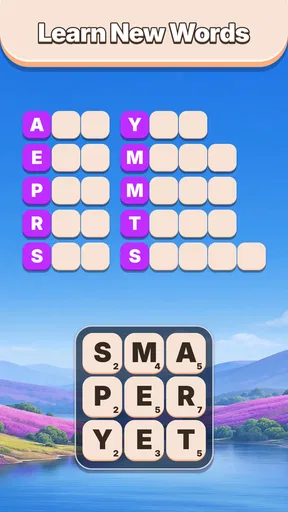
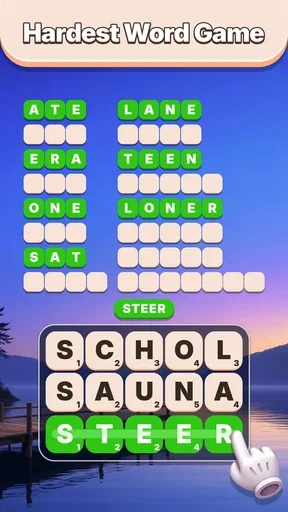

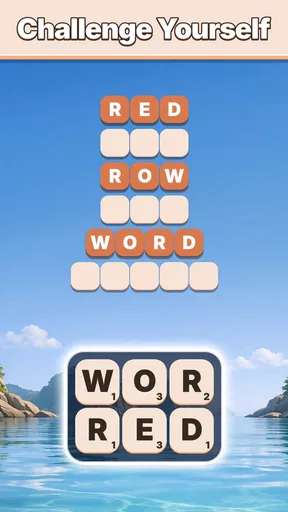
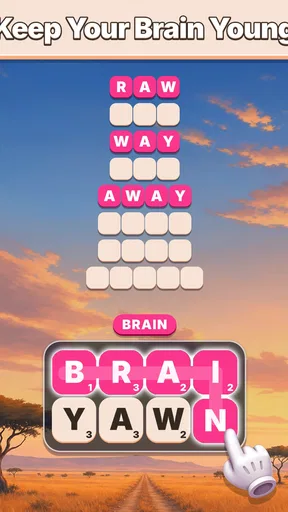
Our Review of Word Tiles - Relaxing Puzzle
 Analysis by Appyee
I spent time with Word Tiles - Relaxing Puzzle, a word puzzle game from Agave Games that keeps its idea easy to understand: arrange or solve word tiles while looking for a calm, satisfying mental challenge. That simple premise is exactly why it appealed to me. I can open it without learning a complicated rule set, play for a short break, and return later without feeling as if I have forgotten a large story or a long chain of objectives.
It is free to download and aimed at Everyone, so the first impression is approachable rather than intimidating. The game has reached over 50 thousand installs and holds a 4.9 average from around 1.8 thousand ratings, which suggests that its relaxed word-game identity is connecting with the people who try it. I would still treat those figures as a starting point, not a guarantee that every player will enjoy the same pace. Word games are personal: some players want pressure and competition, while others want a quiet way to focus.
How the word-tile format feels in everyday play
The strongest part of the experience is its low barrier to entry. A word-tile puzzle gives me something concrete to inspect immediately: letters, possible combinations, and the small satisfaction of spotting a useful arrangement. I do not need to prepare for a long session. It fits naturally into the kind of spare moment when I am waiting for an appointment, taking a break from work, or winding down before bed.
That short-session quality also changes how I judge the game. I am not looking for a deep narrative or a huge collection of systems here. I am looking for readable puzzles, a comfortable rhythm, and enough variation to make the next round feel worthwhile. The store summary calls it a word puzzle game, while the short description reduces the concept to word tiles. In practice, that narrow focus is both the appeal and the boundary: players who enjoy manipulating letters should understand the attraction quickly, but players seeking action, exploration, or a dramatic campaign will probably find it too modest.
One useful way to play is to separate discovery from speed. On a first pass, I look for obvious short words and then examine the remaining letters instead of forcing the first arrangement that comes to mind. This makes the game feel less like guessing and more like a visual sorting exercise. It is a small habit, but it helps when a puzzle initially looks cluttered. I also find that stepping away for a minute can be more productive than repeatedly tapping at the same arrangement, because returning with a fresh view often reveals a combination I had overlooked.
That is one of the less obvious strengths of this format: it can work as a gentle attention reset. I would not describe it as a substitute for a dedicated learning tool, but it does encourage me to slow down, scan details, and test ideas without needing a notebook. For someone who likes wordplay but dislikes noisy interfaces or complicated controls, that simplicity has real value.
Who will get the most from it
I think the best match is a player who enjoys vocabulary-based puzzles and wants flexible sessions. It suits people who like completing one small challenge at a time, as well as anyone who prefers a game that can be picked up without remembering a plot. It may also appeal to families because the age rating is Everyone, although the ideal fit still depends on each player’s reading ability and taste in word puzzles.
I would be more cautious if you need a strong competitive ladder, a detailed achievement chase, or a clearly defined long-term campaign. A relaxing word game can be enjoyable precisely because it avoids those pressures, but that also means it may not provide the same sense of progression as a more structured puzzle alternative. If your favorite games are timed battles or head-to-head word contests, the calm tile-based approach may feel too passive.
For an everyday example, imagine having ten minutes before a train arrives. I would rather use this than begin a story-driven game that expects a longer commitment. I can focus on a puzzle, stop when I need to leave, and return later without worrying about losing the thread of a narrative. That makes it a practical companion for fragmented time, not just a game reserved for a dedicated evening session.
Progress without turning the break into a test
The relaxed presentation matters because word puzzles can easily become stressful when every move is tied to a countdown, limited attempts, or an aggressive ranking system. My preference here is to treat each board as a small problem to understand rather than a performance test. That mindset makes the game more welcoming, especially after a tiring day.
There is a trade-off, though. Players often stay engaged when a game gives them a visible reason to continue: a collection to complete, a difficult tier to reach, or a score to beat. A calm design may not create that same pull for everyone. If I am playing while distracted, the lack of urgency can make it easy to stop after a single puzzle. That is not necessarily a flaw, but it means the game’s retention depends more on my enjoyment of the core word activity than on external pressure.
My practical advice is to set a small personal goal instead of expecting the game to supply a competitive one. I might play until I solve a particularly stubborn arrangement, or use a short session as a break between tasks. This keeps the experience purposeful without turning it into another obligation. It also helps reveal whether the basic tile manipulation is enough for me on its own. If it is not, a more progression-heavy puzzle game would probably be a better choice.
The current version is 1.3.0, so I would keep the installed version up to date when updates are available. That is ordinary advice for any mobile game, but it is especially relevant here because a focused puzzle title depends heavily on smooth presentation and reliable session flow. Even a small interruption can matter when the main attraction is a quick, relaxing round.
What spending means before you commit
The game is free, which makes trying the basic experience straightforward. It also includes in-app purchases ranging from $1.99 to $49.99 per item. That is the part I would pay attention to before spending: the purchase range is broad, so I would not assume that every optional item carries the same weight or value. I would first play enough to decide whether the core word puzzles genuinely fit my habits, rather than buying anything immediately because I enjoyed the first few rounds.
I appreciate that the purchase question can be handled practically. If I only want a few quiet sessions now and then, the free entry point may be all I need. If I become a regular player, I would look carefully at what each purchase changes for my experience and whether it removes a frustration or simply adds convenience. The sensible rule is simple: enjoy the free puzzle loop before treating optional spending as part of the game.
I would also avoid judging fairness solely by the existence of purchases. A paid option is not automatically harmful, and a free game is not automatically generous. What matters to me is whether progress feels reasonable without paying and whether spending creates pressure during normal play. I would make that assessment over several sessions rather than after one enthusiastic first impression. The listed purchase range tells me to be attentive, but it does not by itself prove that the game is unfair.
For parents, the Everyone rating makes the content approachable, but purchase controls are still worth considering on a shared device. That is not specific to this title; it is a sensible precaution whenever a free mobile game offers optional transactions. I would set the device’s purchase protections before handing the phone to a child, especially if the game is being used as a casual family activity.
Fairness, pressure, and the competitive question
Word Tiles - Relaxing Puzzle is easier to recommend to players who value personal progress over competition. The word-tile format naturally invites comparison with other puzzle games, but I would not choose it expecting the intensity of a multiplayer word duel. Its appeal is the individual act of seeing patterns and solving them at a comfortable pace.
That distinction matters for fairness. In a competitive word game, I care about timers, matchmaking, rankings, and whether purchases can influence results. In a relaxing solo puzzle, I care more about whether the board gives me a reasonable chance to think and whether optional spending interrupts that calm rhythm. The less competitive the experience feels, the less important a leaderboard becomes, but the more important the game’s handling of hints, retries, and interruptions becomes.
I would compare it with three familiar alternatives in my own mind. A crossword app is usually better when I want clues, definitions, and a more traditional paper-puzzle structure. A word-search game is better when I want quick visual scanning with less emphasis on constructing words. A competitive word battler is better when I want urgency and a reason to improve against another person. This game occupies a different space: it is for players who like letter manipulation and prefer a softer, more self-contained session.
That position is valuable, but it also sets a high standard for comfort. If the game ever makes me feel rushed or nudged toward a purchase for a basic solution, the central promise of relaxation becomes weaker. My recommendation would therefore depend on your preferred relationship with puzzles. If you like solving at your own pace, the design direction makes sense. If you need constant challenge escalation, you may find the experience underpowered beside a competitive alternative.
Questions I would consider before downloading
One practical question is whether it is suitable for a quick session. Yes, that is where I see the clearest use case. The tile-based concept is easy to revisit, and it does not require the kind of uninterrupted attention demanded by a long-form adventure. I would still avoid assuming that every puzzle will be equally quick; a word arrangement can be simple one moment and surprisingly sticky the next.
Another question is whether it is appropriate for younger players. The content rating is Everyone, so the game is positioned for a broad audience. I would still match it to the child’s reading level and patience. A general age rating does not mean every word puzzle will be equally accessible, particularly when a player is still building vocabulary.
People also often want to know whether a free game can be enjoyed without paying. My answer is cautiously positive: the free download gives me a sensible way to test the core experience, and I would not spend until I knew I wanted more. Because optional items can cost as much as $49.99, I would treat purchases as a deliberate choice rather than an assumed part of normal play.
Another consideration is device compatibility. The game requires at least OS 10, so I would check that a phone or tablet meets that baseline before trying to install it. That requirement is not demanding for many recent devices, but it can matter if you are using older hardware or managing a family device.
Finally, I would ask whether its high rating means it will suit me. The average is 4.9 from around 1.8 thousand ratings, which is encouraging, and there are around 52 written reviews. Still, ratings cannot replace personal fit. A player who loves relaxing word tiles may find exactly what they want, while someone seeking a competitive vocabulary workout may rate the same simplicity as a limitation.
My trust verdict after weighing the trade-offs
Agave Games has made a focused puzzle game rather than an all-purpose mobile time sink. That focus works in its favor. I can understand the concept quickly, use it in short pockets of free time, and approach the puzzles as a quiet mental exercise. The Everyone rating, free entry point, and word-based format make it easy to recommend as a low-commitment download for the right audience.
My reservations are mainly about expectations and spending discipline. I would not choose it as a replacement for a crossword collection, a serious vocabulary trainer, or a competitive word arena. I would also resist buying higher-priced optional items before I had established that the free experience belonged in my routine. The broad purchase range deserves attention, even though it does not automatically make the game unfair.
My final recommendation is to try it if you want calm, bite-sized word puzzles rather than pressure-driven competition. Start with the free experience, play it in the situations where you normally need a short break, and judge whether the tile-solving itself keeps you interested. If that simple loop gives you a satisfying pause in the day, Word Tiles - Relaxing Puzzle is a convincing fit. If you need deep progression, multiplayer tension, or traditional clues, another kind of word game will serve you better.
Privacy and Permissions
See what permissions an app requests and how it handles your data.
- Wi-Fi connection information
- view Wi-Fi connections
- Other
- view network connections, full network access, control vibration, prevent device from sleeping, Google Play license check
Verdict
Strengths of Word Tiles - Relaxing Puzzle
- Simple tile-matching rules make it easy to start playing immediately.
- Short levels fit well into quick breaks or casual play sessions.
- Relaxing presentation creates a low-pressure puzzle experience.
- Word challenges can support spelling and vocabulary practice.
- Progressive difficulty keeps later stages more engaging.
Limitations of Word Tiles - Relaxing Puzzle
- Some puzzles may feel repetitive after extended play.
- Hints or extra moves may be limited without watching ads.
- Ads can interrupt the flow between levels.
- Players seeking intense competition may find it too relaxed.
- A stable internet connection may be needed for certain features.
Other Releases by Agave Games
View All
Find The Cat - Spot It!
Puzzle4.9

Find The Cat 2 - Spot It!
Puzzle4.9

Find Em All! - Hidden Objects
Puzzle5.0
Similar Picks in This Category
View All
Block Blast!
HungryStudio4.8

Braindom: Brain Games Test
Lahana Game Studio4.6

AMAZE!
CrazyLabs LTD4.6

Sudoku - Classic Sudoku Puzzle
Oakever Games4.7

Art Puzzle - Puzzle Games
Easybrain4.8

Amaze GO!
Oakever Games4.9
Frequently Asked Questions
What is Word Tiles - Relaxing Puzzle?
Word Tiles - Relaxing Puzzle is a casual word game focused on finding and connecting letters to form words. Its presentation is designed to feel calm and accessible, making it suitable for short sessions or longer play periods. Instead of emphasizing fast reactions, the game generally rewards observation, vocabulary, and thoughtful tile selection as you progress through its puzzle levels.
How do you play Word Tiles - Relaxing Puzzle?
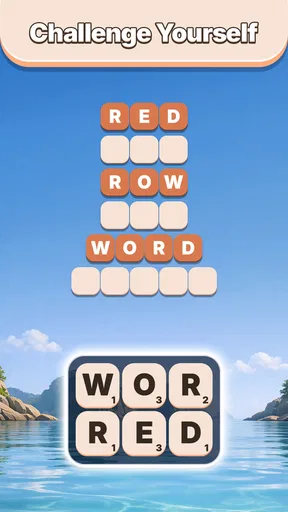
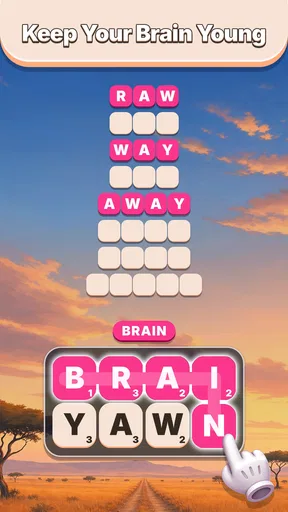
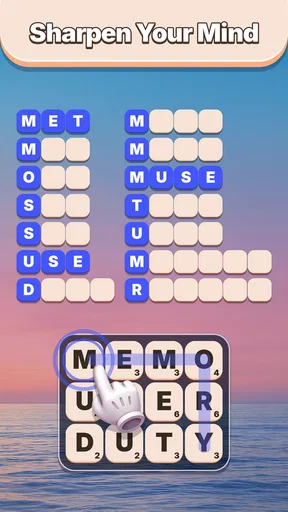
Gameplay typically involves examining a group of letter tiles and swiping or tapping across them to create valid words. The aim is to discover the required answers and complete each level, while optional or hidden words may provide additional challenges. The controls are simple to learn, but later puzzles can require careful planning and a broader vocabulary.
Is Word Tiles - Relaxing Puzzle free to download and play?
The game can generally be downloaded without an upfront purchase, although the exact availability and pricing may differ between Android and iOS. As with many free puzzle games, it may include advertising, optional in-app purchases, or both. Before downloading, check the store listing for current details about ads, paid items, subscriptions, and any restrictions on certain features.
Can Word Tiles - Relaxing Puzzle be played offline?
Many of the core word puzzles may be available without a continuous internet connection, which is convenient for travel, commuting, or playing in areas with weak reception. However, advertisements, cloud synchronization, daily content, updates, and some online services may require internet access. It is best to launch the game while connected first and verify which features remain available offline.
Is Word Tiles - Relaxing Puzzle suitable for children and all skill levels?
The straightforward controls and relaxed puzzle format make Word Tiles - Relaxing Puzzle approachable for many players, including people who enjoy casual vocabulary games. Nevertheless, difficulty can increase as new levels introduce less obvious word combinations. Parents should review the age rating, advertising, in-app purchase options, and privacy information before allowing younger children to play.
Play our best games!


